
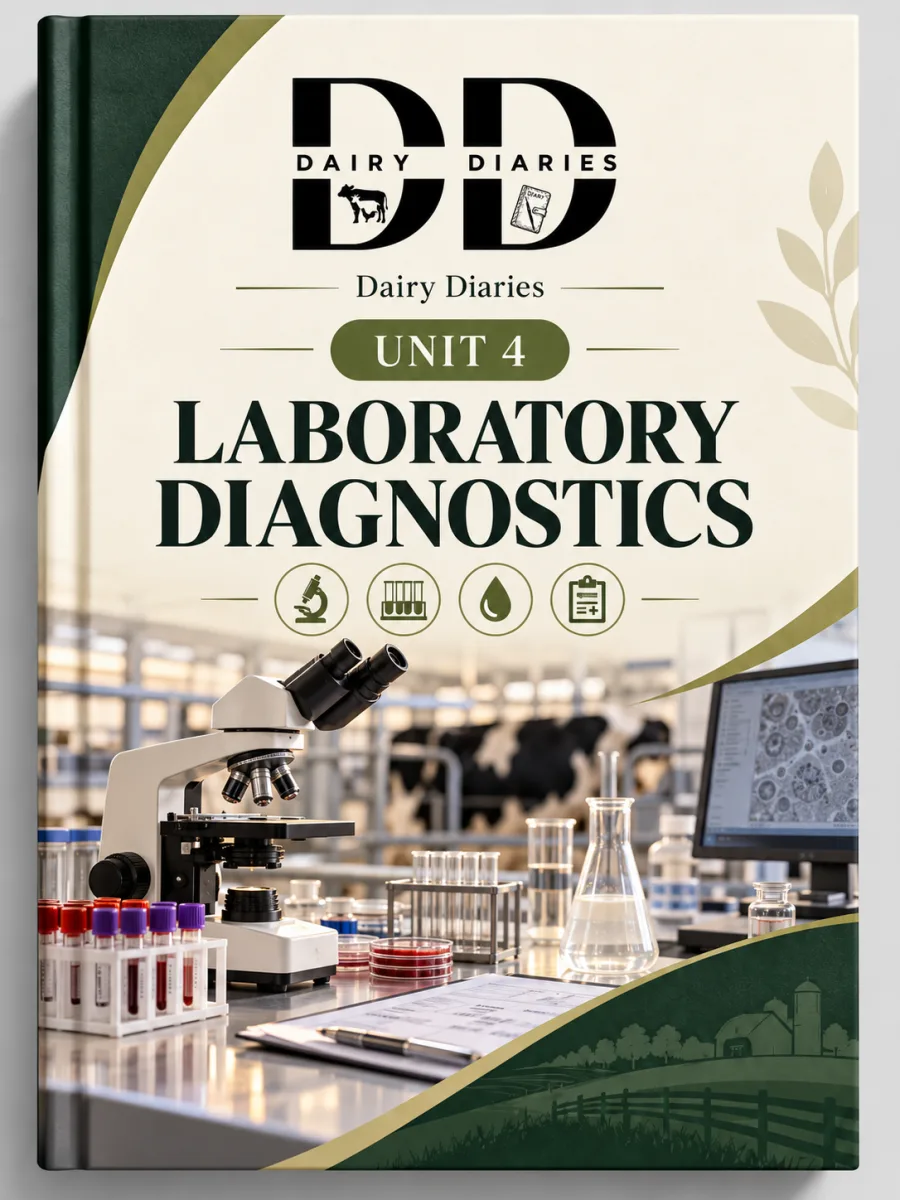
Premium Field Guide
Laboratory Diagnostics
₹399one-time
Available inతెలుగుEnglish
One purchase includes every language listed, and any added later.
Discover the importance of laboratory testing in veterinary healthcare. Learn about sample collection, handling, basic laboratory procedures, diagnostic techniques, and the role of clinical testing in identifying animal diseases. This unit builds foundational knowledge for accurate diagnosis and effective animal health management.
See what's inside — 2 chaptersInstant Access
Secure Payment
1 Year Access
Secure CheckoutPowered by Razorpay
Instant access is granted upon successful payment.
What's Inside This Book
Table of Contents
2 chapters, 113 topics
- 1.1Laboratory PrecautionsPage 1
- 1.2Laboratory Equipment – Their UsesPage 3
- 1.3Important Chemicals Used in Laboratories and Veterinary ClinicsPage 47
- 1.4FumigationPage 49
- 1.5Surgical Instrument SterilizationPage 50
- 1.6Ethylene Oxide GasPage 51
- 1.7Classification of AntisepticsPage 52
- 1.8Oxidizing and Reducing AgentsPage 53
- 1.9Alcohols and PhenolsPage 54
- 1.10HalogensPage 55
- 1.11Antibiotics and Other Antiseptic TypesPage 58
- 1.12AcidsPage 59
- 1.13Sample Collection and Transport RegulationsPage 64
- 1.14Preparation of Standard Solutions Used in the LaboratoryPage 71
- 1.15ColorimeterPage 75
- 1.16Estimation of Blood GlucosePage 77
- 1.17Glucose Quantity CalculationPage 79
- 1.18Estimation of Blood CalciumPage 81
- 1.19Estimation of Blood PhosphorusPage 85
- 1.20Collection, Storage, and Testing Methods of Urine SamplesPage 88
- 1.21Identification of Crystals, Blood, and Haemoglobin in UrinePage 92
- 1.22Milk ExaminationPage 94
- 1.23Collection of Feed Samples and Analysis of NutrientsPage 100
- 1.24Bacterial Culture TechniquesPage 104
- 1.25Anaerobic Bacteria Culture MethodsPage 107
- 1.26Preparation and Identification of Pure CulturePage 108
- 1.27Bacterial Biochemical ReactionsPage 114
- 1.28Voges–Proskauer Test (VP Test)Page 116
- 1.29Indole Production TestPage 117
- 1.30Nitrate Reduction TestPage 119
- 1.31Methylene Blue Reduction TestPage 120
- 1.32Catalase TestPage 121
- 1.33Oxidase TestPage 122
- 1.34Culture Media for BacteriaPage 122
- 1.35Smear Staining MethodsPage 123
- 1.36Types of Staining MethodsPage 124
- 1.37Acid-Fast Staining Method (Acid-Fast Staining / Ziehl–Neelsen Staining)Page 128
- 1.38Special Staining Techniques for BacteriaPage 129
- 1.39Capsulated BacteriaPage 131
- 1.40Antigen–Antibody ReactionsPage 134
- 1.41Types of Antigen–Antibody ReactionsPage 146
- 1.42Precipitation ReactionPage 147
- 1.43Types of Gel Diffusion TestsPage 149
- 1.44Agglutination TestPage 150
- 1.45Abortus Bang Ring Test (ABRT)Page 154
- 1.46Indirect Haemagglutination TestPage 154
- 1.47ComplementPage 156
- 1.48Enzyme-Linked Immunosorbent Assay (ELISA)Page 158
- 1.49Ascoli's Test for AnthraxPage 161
- 1.50Brucellosis Diagnostic TestsPage 161
- 1.51Tuberculin TestPage 164
- 1.52Johne's TestPage 165
- 1.53Mallein TestPage 165
- 1.54Samples Required for the Diagnosis of Various Bacterial DiseasesPage 166
- 1.55Samples to Be Collected for the Diagnosis of Viral DiseasesPage 170
- 2.1Post-Mortem Examination / NecropsyPage 176
- 2.2Procedure to Initiate Autopsy in ChickensPage 184
- 2.3Tissue Preparation and Section CuttingPage 186
- 2.4Hematoxylin & Eosin (H&E) StainingPage 188
- 2.5Special Staining TechniquesPage 189
- 2.6MicrotomePage 189
- 2.7Museum Specimen PreservationPage 191
- 2.8Laboratory Diagnosis MethodsPage 193
- 2.9Practical SyllabusPage 194
- 2.10Mounting and Securing MethodPage 196
- 2.11Major Parasites by Organ SystemsPage 197
- 2.12Rules to Be Followed in AutopsyPage 201
- 2.13Histopathological ExaminationPage 204
- 2.14Tissue Processing Before Section CuttingPage 205
- 2.15Haematoxylin–Eosin (H&E) Staining ProcedurePage 208
- 2.16Blood Smear Staining MethodsPage 210
- 2.17Leishman's Staining ProcedurePage 210
- 2.18Giemsa StainPage 211
- 2.19Requirement of Protozoal CulturePage 214
- 2.20Flotation-Based Egg Recovery TechniquesPage 219
- 2.21Permanent Staining Methods for Faecal SmearsPage 224
- 2.22Collection of Parasitological SpecimensPage 225
- 2.23Surgical Terminology (Important Surgical Terminology)Page 229
- 2.24Surgery – IntroductionPage 230
- 2.25Halsted's Principles of SurgeryPage 235
- 2.26Surgical InstrumentsPage 239
- 2.27Suture MaterialsPage 250
- 2.28Surgical Knots and HitchesPage 261
- 2.29Methods of Animal Restraint and CastingPage 264
- 2.30CastingPage 267
- 2.31Indian / Farrier Casting MethodPage 270
- 2.32Reuff / American Casting MethodPage 271
- 2.33Buffalo Casting MethodPage 272
- 2.34Drugs That Induce Anaesthesia (Anaesthetic Drugs)Page 274
- 2.35Pre-Anaesthetic AssessmentPage 275
- 2.36Surgical PackPage 280
- 2.37Main Surgical Instruments in a Surgical Pack (Surgical Instruments in a Surgical Pack)Page 281
- 2.38Methods of Sterilization of Surgical InstrumentsPage 283
- 2.39Precautions While Using an AutoclavePage 289
- 2.40Classification of Antiseptics and DisinfectantsPage 294
- 2.41Pre-Operative and Post-Operative PrinciplesPage 296
- 2.42InflammationPage 303
- 2.43WoundsPage 306
- 2.44AbscessPage 314
- 2.45Cyst (Cyst / Fluid Cyst)Page 317
- 2.46Tumours / Cancer LumpsPage 320
- 2.47UlcersPage 326
- 2.48NecrosisPage 329
- 2.49GangrenePage 331
- 2.50BurnsPage 333
- 2.51HerniaPage 336
- 2.52Yoke GallPage 341
- 2.53FracturesPage 344
- 2.54Stages of Bone HealingPage 347
- 2.55Dressing MaterialsPage 349
- 2.56Bandage TechniquesPage 351
- 2.57Method of Dressing Different Types of WoundsPage 354
- 2.58Seed Pressing (Castration)Page 356
Chapter and topic names only. The full book opens in your library after purchase.