Premium Field Guide
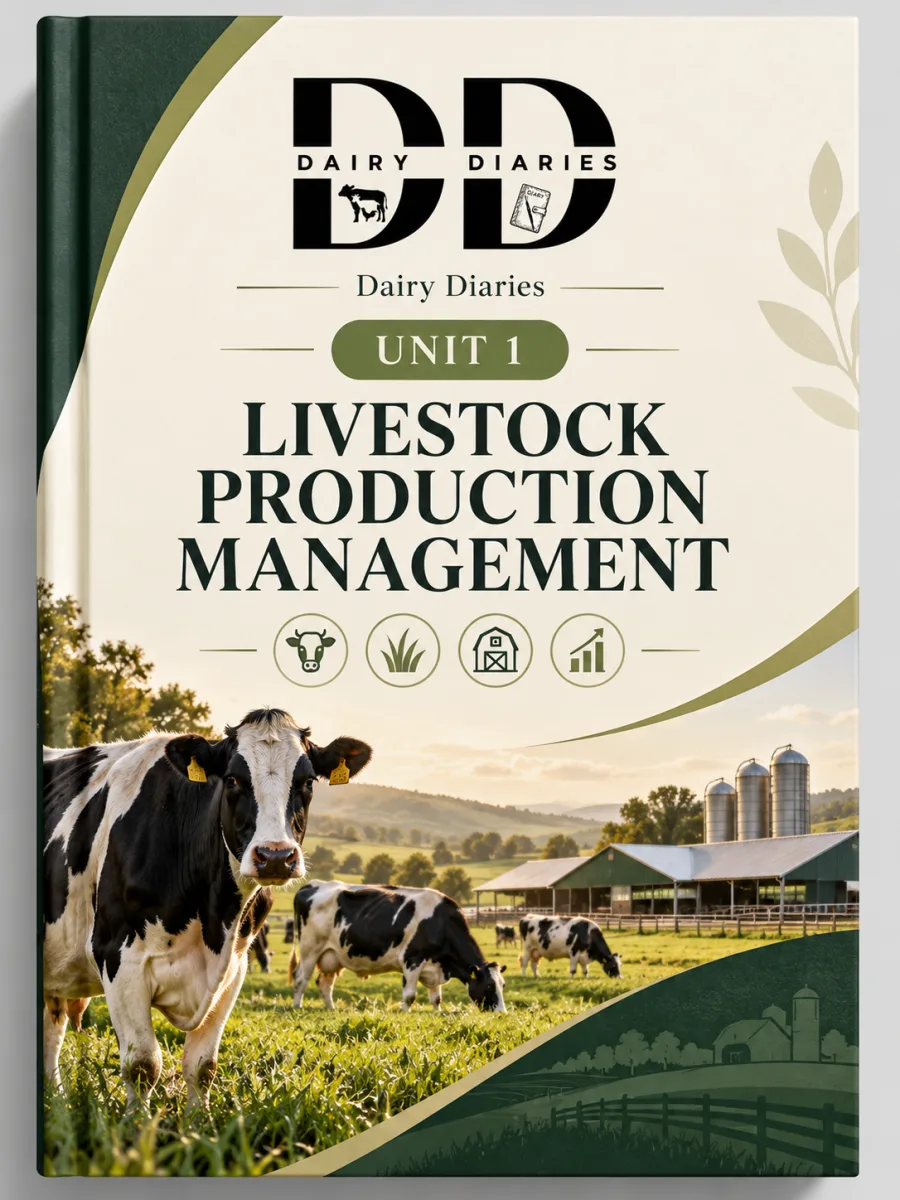
Livestock Production Management
₹399one-time
Available inతెలుగుEnglish
One purchase includes every language listed, and any added later.
Learn the fundamentals of efficient livestock farming, including animal housing, feeding, breeding, nutrition, and daily farm operations. This unit helps veterinary students, livestock farmers, and dairy enthusiasts understand practical management techniques to improve animal productivity, welfare, and sustainable farm performance.
See what's inside — 7 chaptersInstant Access
Secure Payment
1 Year Access
Secure CheckoutPowered by Razorpay
Instant access is granted upon successful payment.
What's Inside This Book
Table of Contents
7 chapters, 101 topics
- 1.1Anatomy of Cattle SkeletonPage 3
- 1.2Cattle Digestive SystemPage 4
- 1.3External Body Parts of GoatPage 5
- 1.4Anatomy of Goat Skeleton SystemPage 7
- 1.5Goat Digestive SystemPage 8
- 1.6Dairy Shed Layout and MeasurementsPage 9
- 1.7Common Terms Used in Farm Animal ManagementPage 11
- 1.8Medical Abbreviations and TermsPage 20
- 1.9Injection Sites with AnglesPage 21
- 2.1Milch BreedsPage 22
- 2.2Dual Purpose BreedsPage 26
- 2.3Draft BreedsPage 32
- 2.4New Breeds Developed in IndiaPage 36
- 2.5Exotic Dairy BreedsPage 38
- 2.6Indian Buffalo BreedsPage 44
- 2.7Selection of Site for a Dairy FarmPage 60
- 2.8Animal Housing Systems (Systems of Housing)Page 66
- 2.9Sanitization in Dairy FarmPage 71
- 2.10Sanitizers Used in ShedsPage 72
- 2.11InsecticidesPage 73
- 2.12Animal Selection MethodsPage 74
- 2.13Selection Process of Milch AnimalsPage 76
- 2.14Animal TransportationPage 79
- 2.15Key Productive Traits of Dairy CattlePage 86
- 2.16Standard DurationPage 87
- 3.1Care and Scientific Management of CalvesPage 91
- 3.2Scientific Care and Management of HeifersPage 94
- 3.3Scientific Care and Management of Milch AnimalsPage 95
- 3.4Scientific Care and Management of Dry and Pregnant AnimalsPage 97
- 3.5Examination of the Mouth in CattlePage 99
- 3.6Casting by Rope Squeeze MethodPage 101
- 3.7Age Determination in Dairy Cattle by DentitionPage 103
- 3.8Methods of Identification in Dairy AnimalsPage 106
- 3.9Behavioural Disorders and Their Control in Dairy AnimalsPage 116
- 3.10Records to be Maintained in a Dairy FarmPage 125
- 3.11Castration of Animals – Necessity, Appropriate Timing, and Burdizzo MethodPage 127
- 3.12Dehorning and Disbudding in AnimalsPage 131
- 3.13Age Suitable for DehorningPage 132
- 3.14Digestive System of RuminantsPage 135
- 3.15Classification of FeedsPage 140
- 3.16ConcentratesPage 147
- 3.17Rations and Feeding StandardsPage 157
- 3.18Importance of Feeding in Dairy Animal ProductionPage 159
- 3.19Systems of Calf RearingPage 162
- 3.20Milk Feeding Schedule for CalvesPage 164
- 3.21Heifer Feeding ManagementPage 168
- 3.22Feeding Management of Milch AnimalsPage 170
- 3.23Feeding of Dry and Pregnant AnimalsPage 174
- 3.24Feeding Management of Freshly Calved Cows and BuffaloesPage 177
- 3.25Feeding During Drought and CyclonePage 179
- 4.1Northwestern Arid and Semi-Arid Sheep BreedsPage 181
- 4.2Marwari and Magra Sheep BreedsPage 185
- 4.3Sheep Breeds of the Northwestern Dry and Semi-Arid RegionPage 190
- 4.4Sheep Breeds of the Northern Temperate RegionPage 196
- 4.5Exotic Sheep BreedsPage 199
- 5.1Goat Breeds of the Northwestern Arid and Semi-Arid RegionPage 208
- 5.2Housing of Sheep and GoatsPage 228
- 5.3Selection of Site for Sheep and Goat FarmingPage 229
- 5.4Space Standards for Sheep and Goat HousingPage 229
- 5.5Types of Sheep and Goat Sheds, Capacity, and Construction StandardsPage 231
- 5.6Selection Criteria for Breeding Sheep and GoatsPage 235
- 5.7Selection Criteria for Breeding Ewes and DoesPage 236
- 5.8Body Conformation and Milking AbilityPage 238
- 5.9Carcass Yield and Quality TraitsPage 239
- 5.10Selection Criteria for Breeding RamsPage 240
- 5.11Testicular Characteristics and Semen QualityPage 242
- 5.12Signs of Oestrus in Sheep and GoatsPage 242
- 5.13Mating Systems and Artificial InseminationPage 244
- 5.14Management of Breeding Ewes and Lambing ManagementPage 247
- 5.15Colostrum Feeding and Mother–Young BondingPage 248
- 5.16Birth to Weaning Management of Lambs and KidsPage 249
- 5.17Emergency Care and Colostrum FeedingPage 250
- 5.18Digestive System Development and Rumen ManagementPage 251
- 5.19Management of Breeding RamsPage 252
- 5.20Daily Management Schedule for Sheep and Goat FarmsPage 255
- 5.21Monthly Farm Management Schedule for Sheep and Goat FarmPage 256
- 5.22Health Management and Identification of Sick AnimalsPage 258
- 5.23Fodder Development and ClassificationPage 260
- 5.24Classification of Animals Based on Digestive SystemPage 263
- 5.25Classification of Fodder CropsPage 264
- 5.26Chaff CuttersPage 267
- 5.27Animal NutritionPage 268
- 5.28Main Forage Crops Grown in the RegionPage 280
- 5.29Grazing Management in Watershed Areas and During the Summer SeasonPage 302
- 6.1Preparing Animal Feed in the Form of Pellets or Blocks (Pelletisation / Total Mixed Ration - TMR)Page 325
- 6.2Hay Preparation and Storage ManagementPage 327
- 6.3Silage Preparation MethodPage 329
- 6.4Enrichment of Paddy StrawPage 334
- 6.5Urea Enriched Paddy StrawPage 335
- 6.6Precautions That Farmers Must Strictly FollowPage 338
- 7.1Comprehensive Information on Vaccines Provided for Animals, Pigs, Livestock, and PoultryPage 341
- 7.2Vaccination for Animals – Methods and PrecautionsPage 347
- 7.3Cattle and Buffalo Vaccination Management SchedulePage 353
- 7.4Vaccination Program for Sheep and GoatsPage 356
- 7.5Vaccination Program for PuppiesPage 358
- 7.6Dog Vaccination SchedulePage 360
- 7.7Pig Vaccination SchedulePage 361
- 7.8Combination Vaccines Given for Two or More DiseasesPage 362
- 7.9Management of Vaccines in Horses and Donkey Species (Equine)Page 363
- 7.10Layer Chicken Vaccination Management SchedulePage 366
- 7.11Staff Working in Veterinary HospitalsPage 368
Chapter and topic names only. The full book opens in your library after purchase.